Replace VRLA Batteries with Smarter Energy Storage for Data Centres
Data centre operators are rapidly transitioning from traditional VRLA (valve-regulated lead-acid) battery strings to lithium-ion battery energy storage systems (BESS). The drivers are compelling: lithium-ion systems occupy 60-70% less floor space, weigh 70% less, operate reliably at higher temperatures, and provide 10-15 year service life compared to 3-5 years for VRLA. Yet the transition is not simply a matter of swapping battery chemistry — it requires integrated power conversion, battery management, and thermal management engineered for the unique operating profile of data centre backup power.
PARWATT integrated LiFePO4 (lithium iron phosphate) BESS solutions provide a complete, pre-engineered energy storage platform for data centre UPS applications. Each system includes battery modules, a battery management system (BMS) with cell-level monitoring and balancing, DC protection and disconnect devices, and — where required — integrated HVAC or liquid cooling. The result is a drop-in replacement for VRLA strings that delivers higher reliability, lower total cost of ownership, and full compatibility with existing UPS infrastructure.
Why LiFePO4 for Data Centre Backup
Among lithium-ion chemistries, LiFePO4 offers the optimal balance of safety, cycle life, and thermal stability for stationary energy storage in occupied buildings. Unlike NMC (nickel manganese cobalt) chemistries, LiFePO4 does not experience thermal runaway at temperatures below 250°C, eliminating the risk of cascading cell failure and fire that has affected other lithium-ion deployments. This intrinsic safety advantage allows LiFePO4 BESS to be installed within the data centre white space, not in separate external enclosures — a critical advantage where real estate is constrained.
LiFePO4 cells maintain consistent performance across thousands of charge-discharge cycles with minimal capacity degradation. For data centre applications where batteries spend most of their life in float service with occasional discharge events, this translates to a 10-15 year operational life with no mid-life battery replacement. The reduction in replacement labour, disposal costs, and operational disruption alone often justifies the higher upfront investment compared to VRLA.
Integrated BMS: Cell-Level Visibility and Control
The PARWATT BMS provides real-time monitoring of every individual cell — voltage, temperature, state of charge, and state of health. Active cell balancing ensures that all cells in a string age uniformly, maximising usable capacity and extending service life. The BMS communicates with the UPS and data centre infrastructure management (DCIM) platform via Modbus TCP and SNMP, providing predictive analytics on battery health and automated alerts when any parameter approaches its alarm threshold.
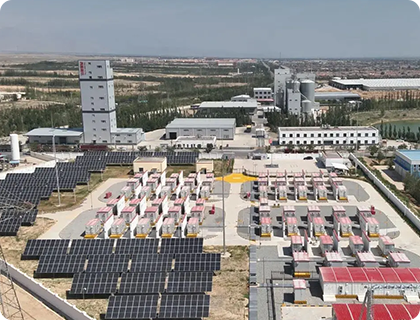
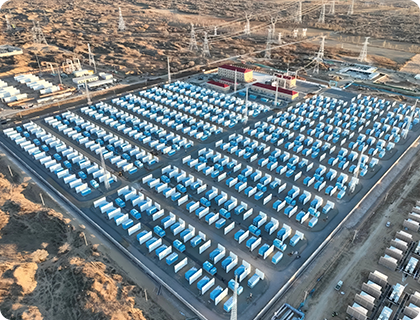
For multi-megawatt data centre deployments, PARWATT containerised BESS solutions integrate battery racks, BMS, fire detection and suppression, and thermal management into a single outdoor-rated enclosure. Containerised systems can be deployed adjacent to the data centre building without consuming valuable internal floor space, and are factory-tested as complete systems before delivery to minimise on-site commissioning time.
Compliance and Fire Safety
PARWATT LiFePO4 BESS comply with UL 9540 (Energy Storage Systems), UL 1973 (Batteries for Stationary Applications), and IEC 62619 (Safety of Secondary Lithium Cells). Integrated fire detection — aspirating smoke detection (VESDA) and thermal imaging — provides early warning of any abnormal condition, while pre-engineered fire suppression options include aerosol-based condensed agent systems that are safe for occupied spaces and leave no residue.
Upgrade your data centre backup from VRLA to lithium-ion with confidence. Contact PARWATT for a BESS sizing and TCO analysis for your facility.