Solar-Plus-Storage Micro-Grids for University Campuses
Universities and research institutions are at the forefront of the net-zero transition, driven by ambitious carbon reduction targets, rising energy costs, and the expectations of students, faculty, and funding bodies. Yet the path from a conventional grid-dependent campus to a resilient, low-carbon energy ecosystem is complex. It requires integrating distributed solar generation, battery energy storage, campus-wide distribution, and intelligent controls into a single, reliable system that never compromises power quality for sensitive research equipment.
PARWATT designs and delivers turnkey campus micro-grid solutions that transform how universities generate, store, and consume energy. From initial feasibility assessment through commissioning and ongoing optimisation, we provide the full spectrum of power infrastructure needed to operate independently from the grid when required — and to export surplus clean energy when conditions are favourable.
Integrated Campus Energy Architecture
A PARWATT campus micro-grid is not a collection of standalone components. It is an engineered system in which every element is sized, specified, and controlled to work together:
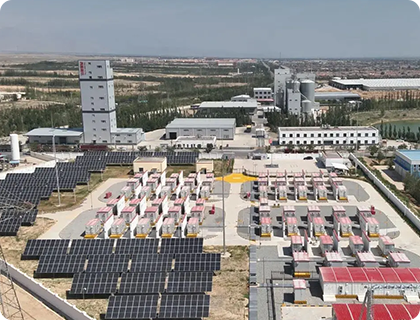
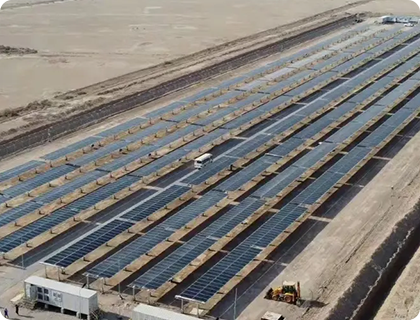
- Solar PV Generation: Rooftop arrays on academic buildings, carport canopies, and ground-mount installations on campus land. PARWATT string inverters (SPI Series) provide high-efficiency MPPT tracking and grid-compliant AC output, with optional DC-coupled architectures for maximum round-trip efficiency when paired with storage.
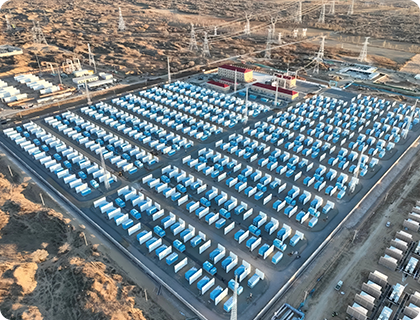
- Battery Energy Storage (BCS Series): Centralised or distributed lithium-ion storage providing peak shaving, demand charge reduction, solar time-shifting, and backup power for critical loads. Containerised BCS solutions scale from hundreds of kilowatt-hours to multi-megawatt-hour capacities, with integrated thermal management and fire suppression.
- Micro-Grid Controller: The intelligence layer that manages power flows between generation, storage, load, and the utility grid. It executes pre-configured operating modes — grid-connected, islanded, peak-shaving, or export — and transitions between them seamlessly, with no interruption to campus operations.
- Campus Distribution: Medium-voltage and low-voltage switchgear, transformers, and protection devices that route power across the campus while maintaining selectivity and fault isolation.
Why Universities Choose PARWATT Micro-Grids
Financial Benefits
Demand charge reduction alone can deliver six-figure annual savings for large research universities. Solar self-consumption reduces volumetric energy charges, while participation in grid services programmes — frequency regulation, capacity markets, demand response — generates new revenue streams from campus energy assets. PARWATT provides detailed financial modelling as part of every project, with transparent assumptions and guaranteed performance metrics.
Operational Resilience
Campus micro-grids provide energy resilience that central utilities cannot match. During grid outages — whether from extreme weather, equipment failure, or planned maintenance — the micro-grid islanding capability keeps critical loads operational: research laboratories with years of ongoing experiments, data centres supporting institutional IT, and life-safety systems in student accommodation.
Educational and Reputational Value
A campus micro-grid is a living laboratory. PARWATT integrates data logging and visualisation tools that allow engineering and sustainability programmes to use the micro-grid as a teaching resource. Real-time dashboards displayed in campus commons engage the broader university community in the energy transition narrative. For institutions competing for top students and research funding, a visible commitment to sustainable infrastructure is a powerful differentiator.
Proven Delivery Methodology
Every PARWATT campus micro-grid project follows a structured delivery process: energy audit and load profiling, system design and modelling, equipment procurement and factory acceptance testing, site installation and commissioning, and ongoing remote monitoring and performance optimisation. Our engineering team works alongside university facilities staff throughout, ensuring knowledge transfer and operational readiness at handover.
Take control of your campus energy future. Contact PARWATT for a preliminary feasibility assessment of your micro-grid potential.